Best Family Board Games for Kids Ages 6-10
Family board games are one of the simplest (and most powerful) ways to bring generations together, build real-world skills, and create the kind of shared memories that stick long after the batteries die. For children aged 6-10, the best games balance a clear rule set and fast turns with interesting choices that reward learning and improvement. Below is a richer, more practical guide to the top family games for that age range, why they work for kids, how to teach them, and how to get the most out of every game night.
What makes a great family game for ages 6-10?
Great family games for this age range tend to:
Have simple, teachable rules so kids can start playing quickly
Keep sessions short or modular (30-45 minutes or shorter rounds) so attention stays high
Encourage interaction and laughter rather than long solitary turns
Offer meaningful choices-decisions that feel consequential but not crushing
Scale in complexity so adults and younger kids can play together and still be challenged
Below each recommended title includes what the game is like, why kids enjoy it, how it helps learning, tips for teaching, and who it’s best for.
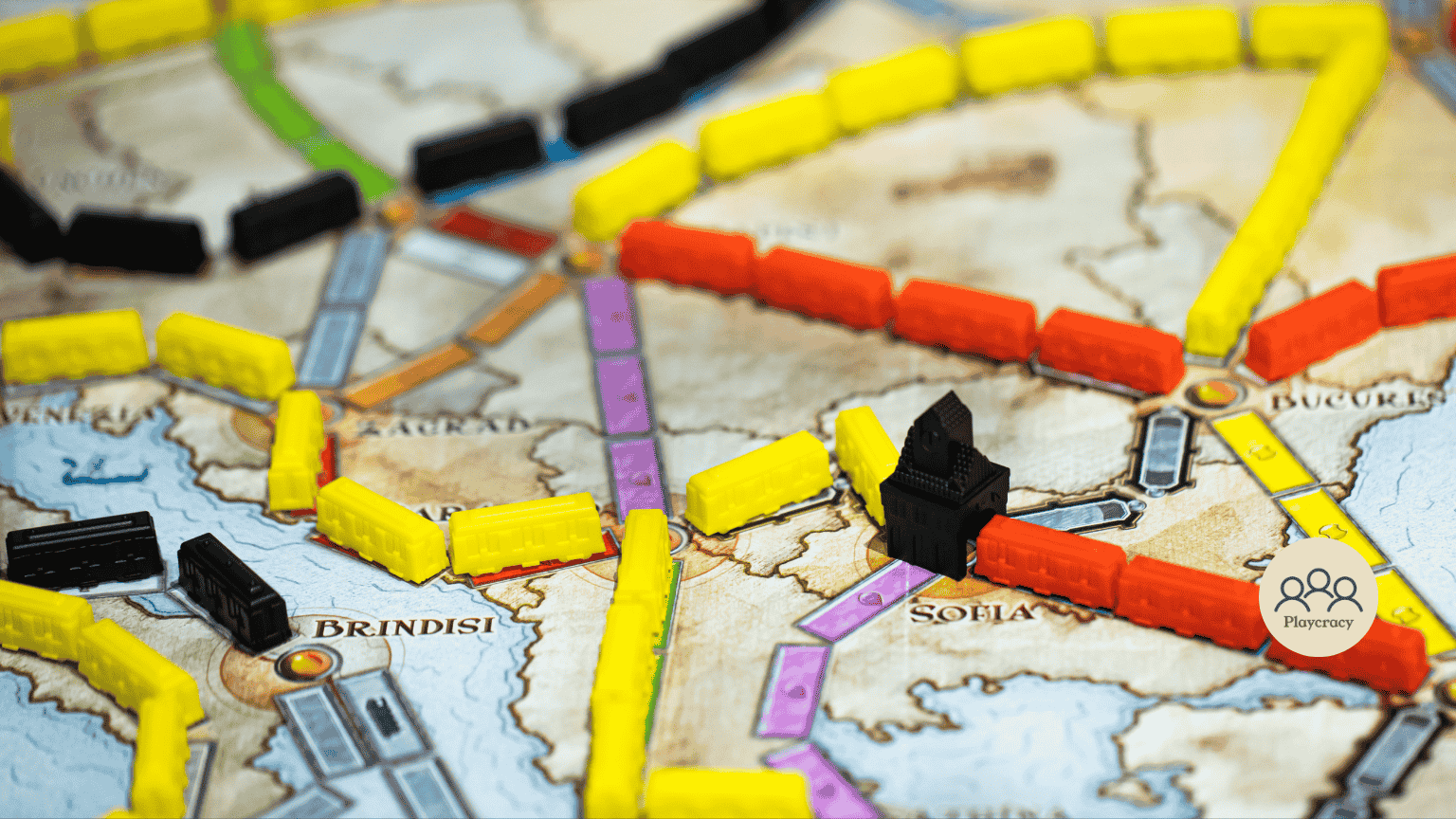
1. Ticket to Ride - best overall family game (gateway for map-based play)
What it is: Ticket to Ride players collect coloured train cards to claim routes on a map, completing secret destination tickets to score points.
Price: €35.00–45.00 / $40.00–50.00. Widely available and often discounted; expansions may increase the cost.
Why kids love it: The map is colourful and immediate - children can see their routes grow, which is satisfying and easy to understand. Turning in matching colour sets is a simple, reachable mechanic that teaches pattern recognition.
Learning benefits: Geography awareness (with different map versions), basic set collection and planning, simple probability thinking (how many cards are likely to appear).
How to teach it quickly: Walk through one turn slowly: draw, show how to claim a short route, and explain destination tickets. Let kids make small route goals first (connect two nearby cities).
Variations for younger players: Consider Ticket to Ride: First Journey for younger children - shorter map, simpler rules, and faster play.
Best for: Families wanting a long-lived “go-to” game that welcomes new players without sacrificing satisfying choices.
2. Kingdomino - best for younger players and first drafting experience
What it is: Kingdomino is a tile-drafting domino-style game where players build a 5×5 kingdom by placing tiles adjacent to matching terrain and connecting crowns to score points.
Price: €20.00–30.00 / $25.00–35.00. Budget-friendly and suitable for younger children; quick play sessions.
Why kids love it: It’s tactile and visual - picking a tile feels like a tiny puzzle piece that fits into their kingdom. The draft order mechanic (choose a tile, then your next turn’s choice depends on selection order) introduces simple planning.
Learning benefits: Spatial reasoning, pattern matching, planning ahead (pick now for a better choice later), and counting/score calculation.
How to teach it quickly: Demonstrate one or two placement rules and show how crowns multiply territory score. Play a practice round where adults explain why they picked a tile.
Best for: Younger kids in the 6-8 range, mixed-age groups, classes or short family sessions (games are quick - around 15-20 minutes).
3. Sushi Go! - best for quick rounds and learning drafting
What it is: Sushi Go! is a fast-paced card-drafting game where players pass hands and collect sushi combinations to score points.
Price: €10.00–15.00 / $12.00–18.00. Affordable, compact card game perfect for short rounds or travel.
Why kids love it: The artwork is bright and silly, and scoring combos (like collecting sets of sashimi or maki rolls) is instantly gratifying. Rounds are very short, so kids don’t get bored.
Learning benefits: Pattern recognition, planning across limited information (you see one hand at a time), simple arithmetic when scoring.
How to teach it quickly: Explain one combo at a time and play two practice drafts so kids get the feel of passing hands. Keep a scoring aid visible for reference.
Best for: Quick warm-up rounds, large family groups (2-5 players), and as an introduction to drafting mechanics before stepping up to deeper games.
4. Carcassonne - best for creative tile placement and gentle competition
What it is: Carcassonne players take turns placing tiles to build a medieval landscape - cities, roads, cloisters and fields - then place meeples to claim or score features.
Price: €25.00–35.00 / $30.00–40.00. Popular, mid-range board game; multiple expansions exist but base game is complete and engaging on its own.
Why kids love it: Each tile placement changes the board visually, which feels like building a shared world. Placing a meeple to “claim” a road or city is a small, repeated thrill.
Learning benefits: Spatial planning, tactical timing (when to deploy a meeple), reading shared opportunities, and basic scoring math.
How to teach it quickly: Start with a cooperative round: adults place tiles with kids and explain what completes a city or road. Then show meeple placement consequences - for example, committing a meeple to a big city ties it up until completion.
Best for: Families who like a slightly longer game (30-45 minutes) with tactical choices and evolving shared play area.
5. Outfoxed! - best cooperative deduction game for young sleuths
What it is: Outfoxed! is a cooperative whodunit where players gather clues, eliminate suspects using a shared clue-sheet and a clever “suspect decoder,” and close in on the thief before too many clues are gone.
Price: €20.00–30.00 / $25.00–35.00. Light cooperative game suitable for younger children; encourages teamwork and deduction.
Why kids love it: It’s investigative and collaborative - kids get to be detectives together. The cooperative structure removes the sting of losing and encourages teamwork.
Learning benefits: Deductive reasoning, collaborative discussion, turn-taking, and communication skills.
How to teach it quickly: Frame it as a short mission: you are the detective team, you have X clues, how will you check the suspects? Let children suggest which room or suspect to examine next.
Best for: Families with younger children (5-8) and groups that prefer working together rather than competing.
How to teach games to kids (quick checklist)
Do one quick demonstration round rather than reading every rule front-to-back. Kids learn faster by doing.
Limit choices on the first play: give target objectives (e.g., in Ticket to Ride, try to connect these two cities) to keep decisions focused.
Praise process, not outcome: comment on good planning or neat moves rather than “winning” alone.
Use visual aids: score sheets, reminder cards, or taped diagrams help with math and rule memory.
Shorten or adapt rules for first sessions: remove complex scoring or optional rules until players are comfortable.
Game-night variations to keep things fresh
Team play: Pair an adult and a child as a team for cooperative or competitive games so younger players get coaching in-play.
Timed turns: Use a sand timer for older kids to speed decisions and keep the game moving.
Handicap rules: Give older players limitations (fewer starting resources) or extra goals to even the playing field.
Tournament style: For replayable games like Kingdomino or Ticket to Ride, track short “best-of-three” scores across family nights.
Picking the right game for your group
Ask yourself:
How long is our typical play window? Short rounds: Sushi Go!, Kingdomino. Longer family sessions: Ticket to Ride, Carcassonne.
Do players prefer cooperation or competition? Cooperative: Outfoxed!. Competitive but gentle: Ticket to Ride, Kingdomino.
How many players do we usually have? Most suggestions scale well, but check player counts for each base game.
Do children prefer theme or puzzle? Theme-driven: Outfoxed!, Ticket to Ride. Puzzle-driven: Patchwork-style games (if you want a new recommendation), Carcassonne.

FAQ - quick answers parents ask most
Q: What game is best for a mixed-age family with kids 6-10?
A: Ticket to Ride (or Ticket to Ride: First Journey for younger kids) and Carcassonne scale well for mixed ages, letting adults play strategically while kids focus on achievable short-term goals.
Q: How can I keep younger kids engaged during longer games?
A: Give them small side-tasks (score-keeping, helping set tiles), or use modular rules - play until a set condition is met, then stop and tally.
Q: Are expansions worth it for family games?
A: Only after the base game is well understood. Some expansions add complexity that may overwhelm younger kids, while others simply add variety without extra rules - choose carefully.
Final thoughts
Family games for children aged 6-10 should be inviting, repeatable, and rewarding in small doses. The titles above - Ticket to Ride, Kingdomino, Sushi Go!, Carcassonne, and Outfoxed! - offer a variety of experiences: map-based planning, spatial puzzles, quick drafting, shared world-building, and cooperative deduction.
If you are looking for even more options, the list of cooperative games can also give you amazing family suggestions.
Each one teaches useful skills while keeping the table lively and inclusive, so you can trade screen time for real conversation, laughter, and those small, perfect moments when a plan comes together. And if you want to keep up with board games, subscribe here. It’s free and quick!
