Best Cooperative Board Games
Cooperative board games flip traditional competition on its head. Instead of playing against each other, players work together to defeat the game itself - coordinating actions, sharing information, and solving emergent problems as a team. This guide explores the best cooperative board games, from family-friendly adventures to deep strategic challenges, and explains what makes each title special, how it plays, and when to bring it to your table.
Why play cooperative board games?
Co-op games are popular because they:
Encourage teamwork and communication - players must coordinate to beat the scenario.
Work well for families and mixed-skill groups - experienced players can help newcomers without eliminating agency.
Appeal to players who dislike direct conflict - success is shared; so are the failures.
Create memorable shared victories and stories - winning together is emotionally satisfying and often cinematic.
If you’re searching for “best cooperative board games,” “top co-op games for families,” or “cooperative strategy games,” the titles below match those intents and cover a broad range of complexity, length, and player counts.
1. Pandemic - the classic cooperative board game (best for tense teamwork & scalable difficulty)

Overview: Pandemic is the cooperative modern classic in which players take on specialist roles (Medic, Dispatcher, Scientist, etc.) working together to stop multiple disease outbreaks spreading across a world map. Each player’s unique abilities and collaborative planning are critical to mission success.
Price: €35.00 to €45.00 ($40.00 to $50.00). Widely available and often discounted, with numerous expansions and spin-offs (Pandemic Legacy, Iberia, etc.) priced higher.
Why it’s iconic: Pandemic balances tight decision-making and escalating tension. The infection deck pushes crises forward while players manage limited actions and travel to treat outbreaks, discover cures, and coordinate logistics.
Gameplay highlights:
Roles with asymmetric powers drive teamwork.
The infection deck and epidemic cards ramp difficulty over time.
Multiple loss conditions (outbreaks, running out of cubes, running out of player cards) keep tension high.
Players / Time / Weight: 2–4 players (base), ~45 minutes, medium weight
Best for: Groups who enjoy tactical planning, crisis management, and cooperative problem-solving.
Winning tips:
Prioritize removing disease cubes before they trigger outbreaks.
Use roles optimally (e.g., the Scientist reduces discovery requirements).
Plan turn sequences to minimise wasted actions.
2. Forbidden Island - best for families and beginners (fast, approachable co-op)
Overview: Forbidden Island is a streamlined cooperative game by Matt Leacock (designer of Pandemic) built for families and quick sessions. Players work together to retrieve treasures and escape a sinking island before it disappears beneath the waves.
Price: €20.00 to €30.00 ($25.00 to $35.00); budget-friendly and frequently bundled or discounted.
Why it’s great for families: Short setup, clear objective, and simple actions make it ideal for children and mixed-ability groups while still offering emergent tension as the island floods.
Gameplay highlights:
Tile-based island that sinks progressively.
Role abilities and cooperative movement allow tactical planning.
Adjustable difficulty via water level for easier or harder sessions.
Players / Time / Weight: 2–4 players, 30 minutes, light weight
Best for: Families with kids, classroom play, casual groups, and anyone wanting a gentle introduction to co-op mechanics.
Winning tips:
Prioritise shoring up key tiles that block access to treasure or the exit.
Use roles to split responsibilities (one player secures treasures while another manages flooding).
Discuss a short plan each turn to avoid wasted moves.
3. Spirit Island - best for advanced strategy gamers (deep, asymmetric co-op)
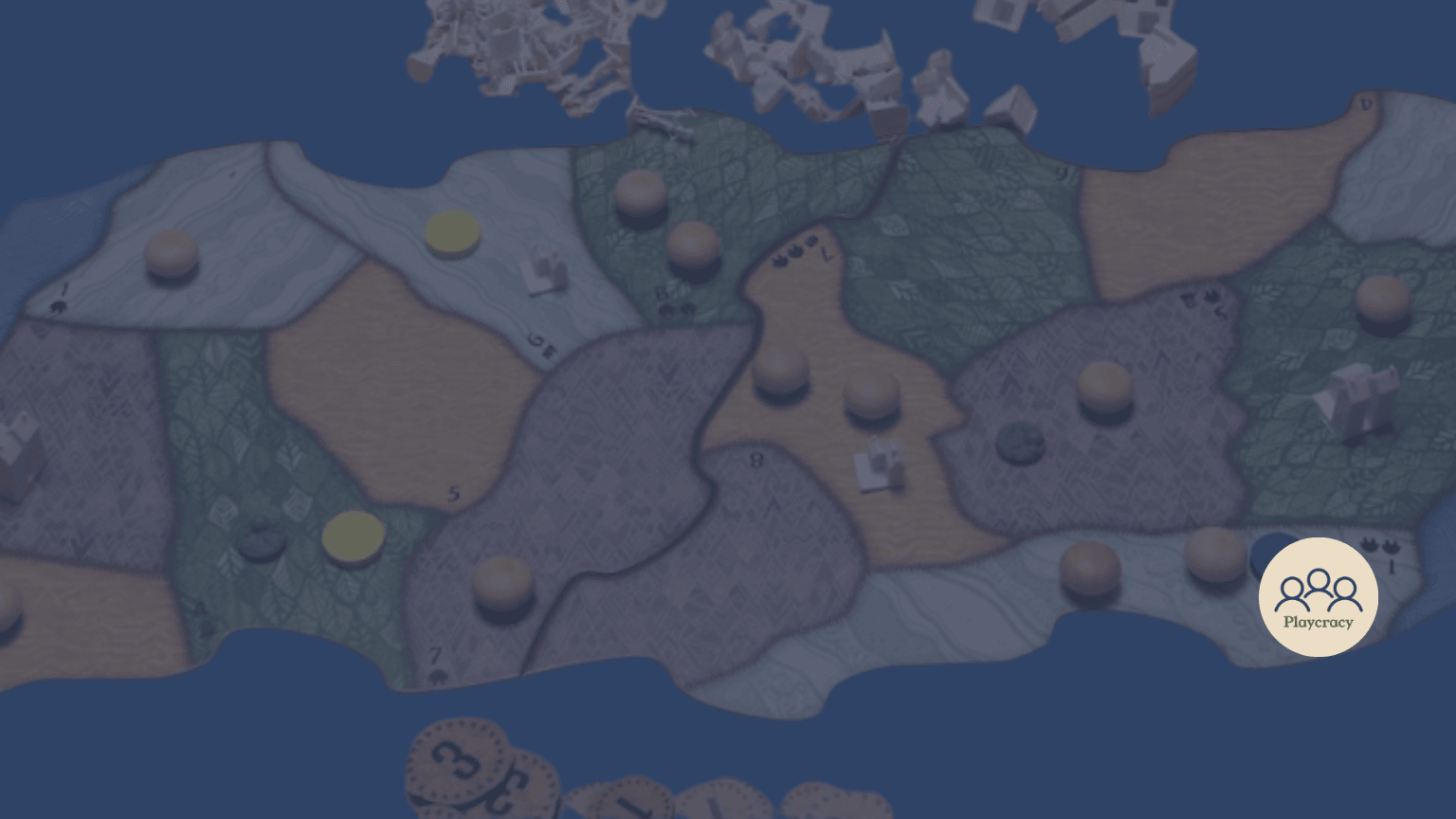
Overview: Spirit Island is a complex, highly strategic cooperative game where each player embodies a spirit defending an island from colonising invaders. Rather than controlling settlers, players influence the land through asymmetric powers, special cards, and escalating enemy actions.
Price: €70.00 to €90.00 ($80.00 to $100.00); Premium pricing reflects depth and component quality. Expansions (Branch & Claw, Jagged Earth, Nature Incarnate) add significantly to total cost.
Why advanced players love it: Spirit Island leans heavily on asymmetric design: each spirit plays completely differently, with unique mechanics, power growth, and playstyles. The game rewards coordination, forward planning, and mastering synergy between spirits.
Gameplay highlights:
Asymmetric spirits with modular power cards and growth options.
Phased invader actions create predictable patterns to exploit.
Complexity scales with adversary settings and scenario choices.
Players / Time / Weight: 1–4 players (base), 90–150 minutes, heavy weight
Best for: Gamers who love long, tactical planning sessions, heavy co-op challenge, and asymmetric gameplay.
Winning tips:
Learn your spirit’s core strategy (e.g., control, damage, fear generation).
Coordinate power choices to interrupt invader placement and ravage chains.
Use defensive plays early and ramp to big coordinated offensives.
4. The Crew: Mission Deep Sea - best cooperative trick-taking card game (tight communication puzzles)
Overview: The Crew: Mission Deep Sea (a follow-up to The Crew: The Quest for Planet Nine) adapts trick-taking into a cooperative mission structure. Players play cards in suits, aiming to achieve mission objectives with severely limited communication - creating tense, puzzle-like rounds.
Price: €15.00 to €20.00 ($15.00 to $20.00). Excellent value-to-playtime ratio. One of the most affordable modern co-op classics.
Why it stands out: The Crew turns a competitive card mechanic into a team puzzle. Each mission adds constraints (specific player must win a trick, or certain cards must be played in sequence), forcing players to infer intentions and plan collectively without usual communication.
Gameplay highlights:
Mission structure with progressive difficulty and unique objectives.
Limited communication tokens that force indirect signaling.
Quick rounds: multiple missions in a short time.
Players / Time / Weight: 2–5 players, 20–30 minutes per mission, light weight
Best for: Groups who want short, clever sessions that emphasize deduction, timing, and non-verbal coordination.
Winning tips:
Pay attention to card counts and known information from previous tricks.
Use communication tokens sparingly to guide critical plays.
Practice mission-specific patterns to improve group synergy.
5. Gloomhaven - best epic cooperative campaign (massive legacy-style RPG experience)
Overview: Gloomhaven is a sprawling campaign game that blends tactical combat, RPG progression, and legacy-style choices into an epic cooperative experience. Players take on mercenary characters, level up, acquire new abilities, and make campaign decisions that permanently alter the game world.
Price: €120.00 to €160.00 ($140.00 to $180.00). Large box, massive component count, and long campaign justify the price. Frequently discounted but still a high upfront investment. For comparison: Gloomhaven: Jaws of the Lion is usually €45.00–55.00 / $50.00–60..00
Why it’s a landmark: Gloomhaven popularised deep, branching campaigns in board games - the stories and player progression create lasting investment and a strong sense of consequence across dozens of sessions.
Gameplay highlights:
Card-driven combat with hand management and initiative.
Persistent campaign map with branching scenarios and unlockables.
Legacy elements: retire characters, open sealed content, and alter the world.
Players / Time / Weight: 1–4 players (base, with variations allowing more), 60–120+ minutes per scenario, very heavy weight
Best for: Dedicated groups seeking an extended co-op campaign with tactical combat, character progression, and high replay potential.
Winning tips:
Build party synergies - complementary classes make scenarios easier.
Manage hand exhaustion; choose cards and rests wisely.
Read scenario objectives carefully - sometimes non-combat options yield better results.
How to choose the right cooperative game for your group
When selecting a co-op game consider:
Group makeup: Families with kids should prioritise Forbidden Island or simpler co-op titles; hobbyist groups may prefer Spirit Island or Gloomhaven.
Session length: Short evenings call for The Crew or Forbidden Island; campaign players will love Gloomhaven.
Complexity & learning curve: Pandemic and Forbidden Island are accessible; Spirit Island and Gloomhaven require a steeper time investment.
Replayability: Look for modular scenarios, varying difficulty levels, and asymmetric roles for long-term variety.
If you’re looking for games to play with your family, Playcracy’s list of family board games adds to this article by showing you even more options.
And if you want to have tips on the best releases in the board game space, subscribe here!
