Area 636
There’s a moment when you first open Area 636 that makes you think you’ve stumbled onto something special. The box layout is clean, the components are generous, and the design language feels deliberate - every tracker, card, and token fits into a clear visual identity. The game oozes atmosphere before you’ve even punched out your first token.
Set in a near-future world of shadow operations and moral gray zones, Area 636 casts players as elite agents from rival nations infiltrating a U.S. facility hiding the mysterious A.E.G.I.S. system - a predictive defense technology that could rewrite the logic of war itself. The theme is cinematic, and the lore snippets are surprisingly compelling. Each agent’s backstory adds just enough flavor to make you want to pick favorites.
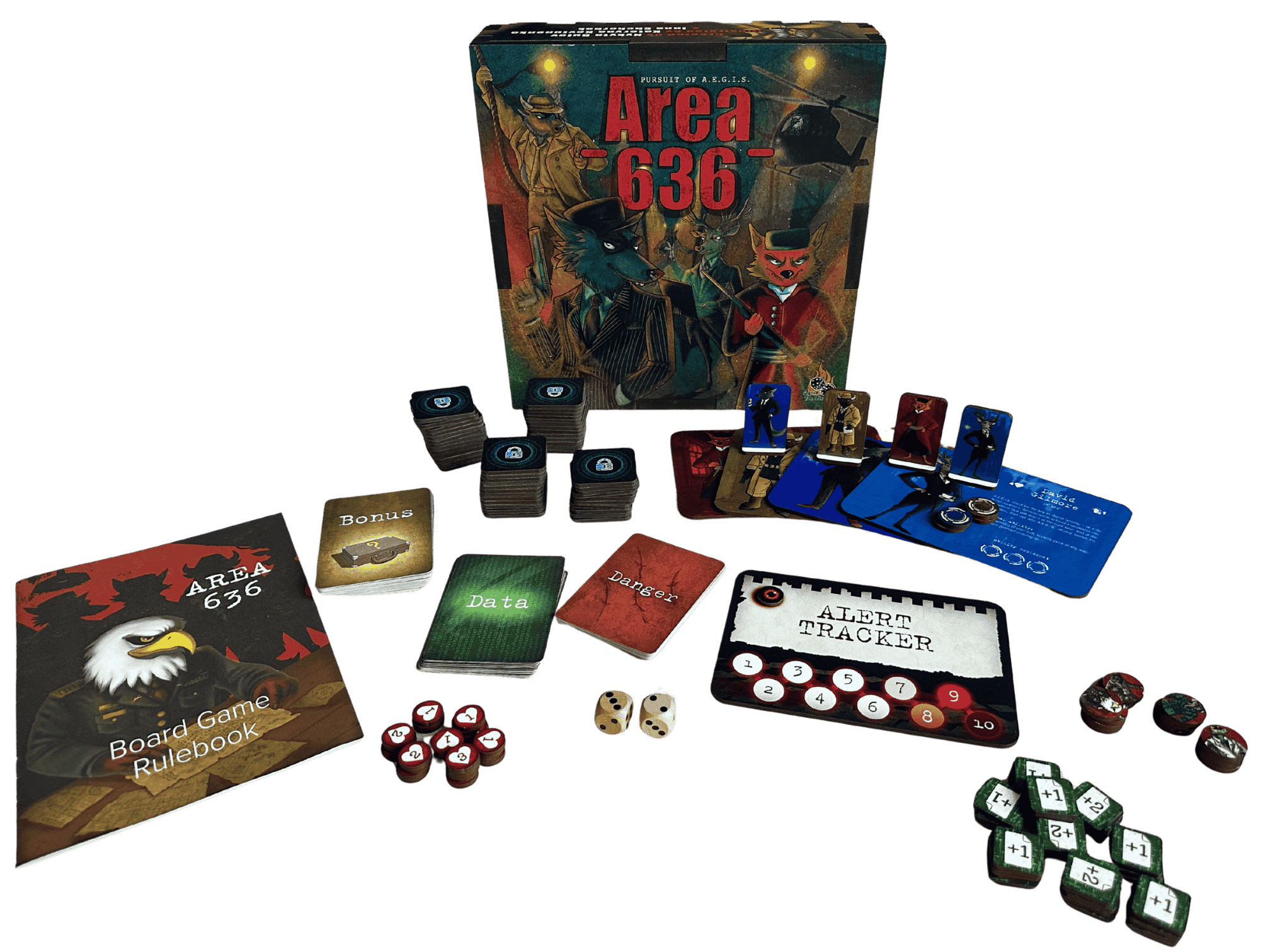
The components of Area 636
Presentation and Design Quality
It has to be said: this is a beautifully produced game. The art direction is cohesive, the modular tiles are sturdy and satisfying, and the character and danger cards carry a professional, high-budget aesthetic. The layout and component design suggest that someone behind the project truly cared about creating a premium experience. The cards containing a description of the characters in the Deluxe version do suffer from blurriness in the text print.
Overall, however, Area 636 hits the right notes when it comes to design - sleek, dark, and evocative. The problem is, the play experience doesn’t quite match that polish.
Where Things Get Bumpy: The Rulebook
The rulebook is where the experience stumbles a little. It reads like it could have used one more editing pass, and a few instructions come across as unclear. For example, the four-player setup says each player “starts in the tile nearest to them,” which is tricky when everyone has an entire row of seven tiles in front of them. It’s not obvious which one counts as “nearest.”
It’s a small detail, but it hints at a broader pattern: players occasionally have to make educated guesses. Questions like where everyone actually starts or whether you can move back and forth between tiles pop up more than once.
Moments that should feel like a smooth infiltration run can turn into quick clarifications. Area 636 involves a fair amount of procedural detail, and not all of it comes across as clearly as it could.
The turn structure (move, interact, draw a card) is straightforward in principle, but each step has a few exceptions. Tracking those can sometimes make the system feel a little more complex than it first appears.
Gameplay: Cool Ideas, Clunky Execution
When you get the game moving, there are some clever mechanics at play. The alert tracker adds some tension, and the modular tile-flipping creates a sense of exploration. But even this has its own frustrations - flipping tiles without making a mess is genuinely tricky. You’ll often have to lift and replace your miniature every time you reveal a new tile, which interrupts the flow of play and makes the game feel more fiddly than tactical.
Thematically, it works. Mechanically, the pacing can sometimes feel a bit off - moments of action are separated by stretches of mechanical upkeep. It’s the kind of design that rewards patient, detail-oriented groups but might lose players looking for a smoother, more intuitive experience.
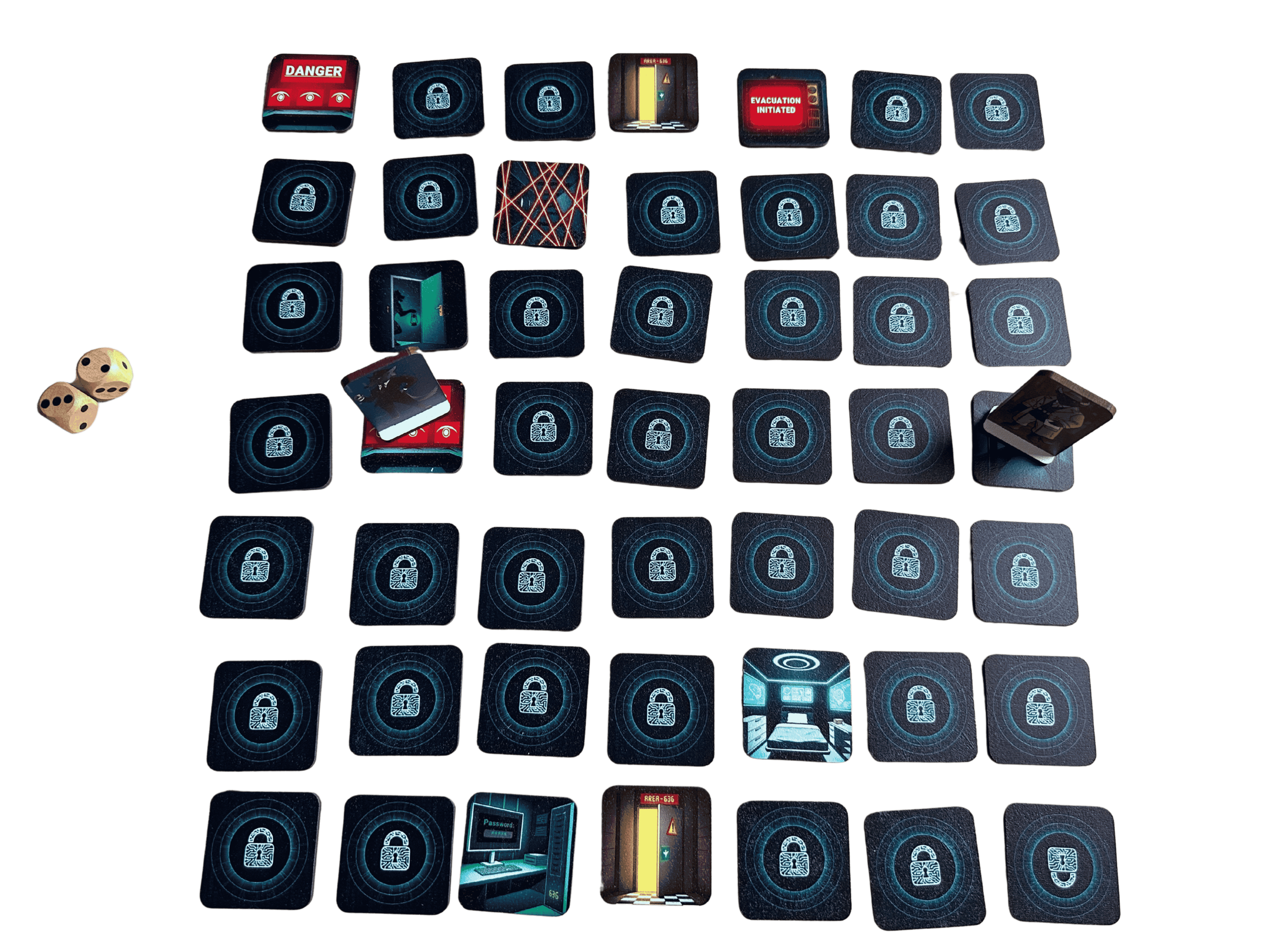
The game board of Area 636
The Bright Side
We want to emphasize this: the foundation of Area 636 is strong. This game has a ton of heart. The design vision is there, the theme is compelling, and the aesthetic presentation is generally really good. This is not a sloppy or lazy product: it’s a smart concept that suffers from its execution.
With a tightened rulebook, a simpler rule set, and a few physical tweaks (for instance to avoid flipping chaos), Area 636 could easily earn an 8/10.

The characters of Area 636
Verdict
Area 636 is a truly smart game. Its ambition and visual flair are undeniable, and it deserves credit for that. But for now, it’s a game that asks for too much interpretation from the players - a puzzle of strategy, but sometimes also of instructions.
If you’re willing to smooth out the rough edges with a few house rules and a generous helping of patience, there’s still a rewarding experience awaiting here.
Final Score: 6.5 / 10. Find out more about the game here!
Beautiful, imaginative, and almost there - but a clearer rule set could make it shine much brighter.
Are you trying to have your game reviewed? Contact us now for a quote!
